


lifeguards and water safety

our Lifeguards
Our lakes and beaches are central to life in Highland Lakes, offering a place to relax, connect with neighbors and enjoy the beauty of our community. Whether you're swimming, kayaking, or just enjoying the view, these shared spaces are where summer memories are made. With so many residents and guests enjoying the water, maintaining a safe and welcoming environment is essential.
Each summer, our dedicated team of certified lifeguards plays a critical role in protecting beachgoers. Trained in lifesaving techniques, emergency response and water safety protocols, our guards are prepared to respond swiftly and effectively. Beyond their watchful presence, they help educate members about safe practices and uphold the rules that keep our beaches running smoothly. Their work ensures that everyone, from young children to longtime residents, can enjoy Highland Lakes’ natural resources with confidence.
apply to be a Lifeguard
Each season Highland Lakes seeks certified, responsible, and energetic lifeguards to ensure safety at our lakefront beaches.
Lifeguard Requirements:
- Must be at least 16 years old
- Pass the American Red Cross swim test.
- Have current lifeguard/CPR certifications
- Be available weekdays and weekends during our 80-day summer season.
- Complete THIS APPLICATION and email to watersafety@hlcc.org
- 2026 OFFSITE Lifeguard Certification/Recertification Courses
- 2026 HLCC Lifeguard Recertification Course. Courses will be held on June 15th and June 27th 9AM-5PM at HLCC Clubhouse.
- Form: CLICK HERE TO REGISTER
- 2026 HLCC Lifeguard Certification Course
- August 3rd - August 7th 1PM-6PM
- Form: CLICK HERE TO REGISTER
- Lifeguarding future course interest form: https://form.jotform.com/251544862034152
JUNIOR LIFEGUARD PROGRAM
The Highland Lakes Country Club & Community Association Water Safety Team is proud to offer the 2026 Junior Lifeguard Program on July 6th, held at the HLCC Swim Lanes from 11:00 AM to 3:00 PM.
This hands‑on program is designed for HLCC Members ages 14 and 15 who want to deepen their understanding of waterfront safety, lifesaving skills, and the responsibilities of lifeguarding within our community. Participants will learn from trained HLCC Water Safety staff through guided instruction, practical skill-building, and on‑the‑water activities.
Members interested in joining can register using the link below. Further program details are also available through the sign‑up link.


lifeguard olympics
Each August lifeguards from the different beaches are paired into teams that compete against each other in various athletic/fun events. Held in the early evening at Beach One, this is one of the most popular spectator sports in Highland Lakes as families and friends gather to cheer on their beach. Some of the events include Rescue Board Races, Beach Volleyball, capture the flags, tugs of war, sand soccer, wacky relay race, and on and on. Lifeguards bring baked goods for sale and all proceeds are donated to the American Red Cross.
Learn to Swim
SWIM LESSONS are offered exclusively to children of all ages (members only). These lessons are conducted by a select team of Highland Lakes lifeguards, all of whom are certified Water Safety Instructors, ensuring a high standard of safety and expertise in teaching your child essential swimming skills.

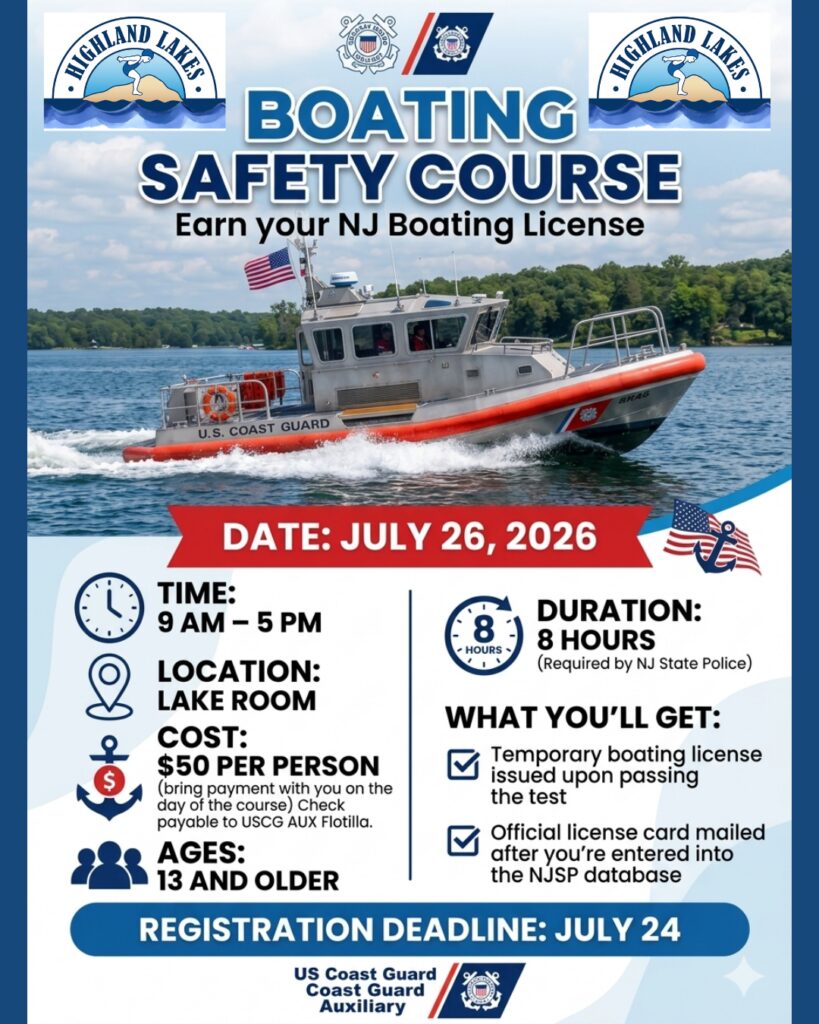
Boat Safety Course – Earn your NJ Boating License
Date: July 26, 2026
Time: 9 AM – 5 PM
Location: Lake Room
Cost: $50 per person (bring payment with you on the day of the course) Check payable to USCG AUX Flotilla.
Ages: 13 and older
Duration: 8 hours (required by NJ State Police)
What You’ll Get:
Temporary boating license issued upon passing the test
Official license card mailed after you’re entered into the NJSP database
Registration Deadline: July 13
Swimming Safety
- Always swim with a buddy; never swim alone.
- Read and obey all rules and posted signs.
- Swim in areas that are supervised by a lifeguard.
- Children or inexperienced swimmers should take extra precautions, such as wearing U.S. Coast Guard-approved life jacket when around water.
- Watch out for the “dangerous too’s”- too tired, too cold, too far from safety, too much sun, too much strenuous activity.
- Set water safety rules for your family based on swimming abilities (for example, inexperienced swimmers should stay in water less than chest deep).
- Be knowledgeable of the water environment you are in and its potential hazards, such as deep and shallow areas, currents, depth changes, obstructions, and where the entry and exit points are located. The more informed you are, the more aware you will be of hazards and safe practices.
- Know how to prevent, recognize and respond to emergencies.
- Use a feet-first entry when entering the water.
- Enter head-first only when the area is clearly marked for diving and has no obstructions.
- Do not mix alcohol with swimming, diving, or boating. Alcohol impairs judgment, balance and coordination, affects your swimming and diving skills, and reduces your body’s ability to stay warm.
- Know how to prevent, recognize and respond to emergencies.